
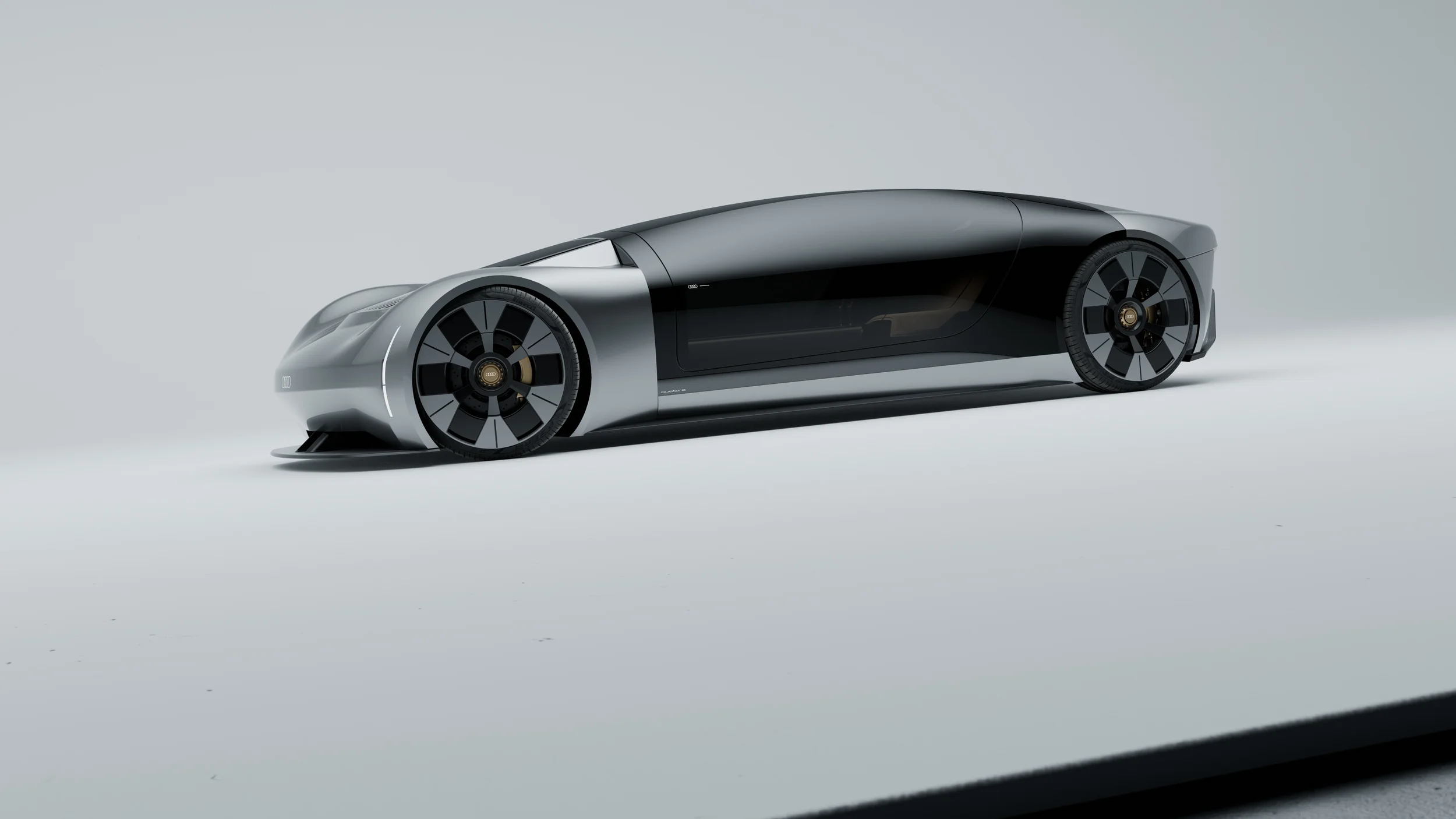
AUDI NOVUM | Automotive Design & CGI Visualization
Think about the last time a product stopped you in your tracks. A chair at a friend's place that caught your eye the moment you walked in. A lamp glowing in a shop window that made you slow down on the street. A car approaching from a distance that you kept watching until it drove past.
You could not quite explain it yet. But something about it just worked.
You moved closer. It started making more sense. The attitude of it, the way it seemed to express something without saying a word. And only when you were right up to it did the small things reveal themselves. The craftsmanship. The finishing touches. The details that made you think: someone really cared about this.
That experience did not happen by accident. It was designed that way, deliberately, and in exactly that order.
This is the idea behind a design approach called 100-10-1. And once you understand it, you will start seeing it everywhere. And the lack of it too.
What Is 100-10-1?
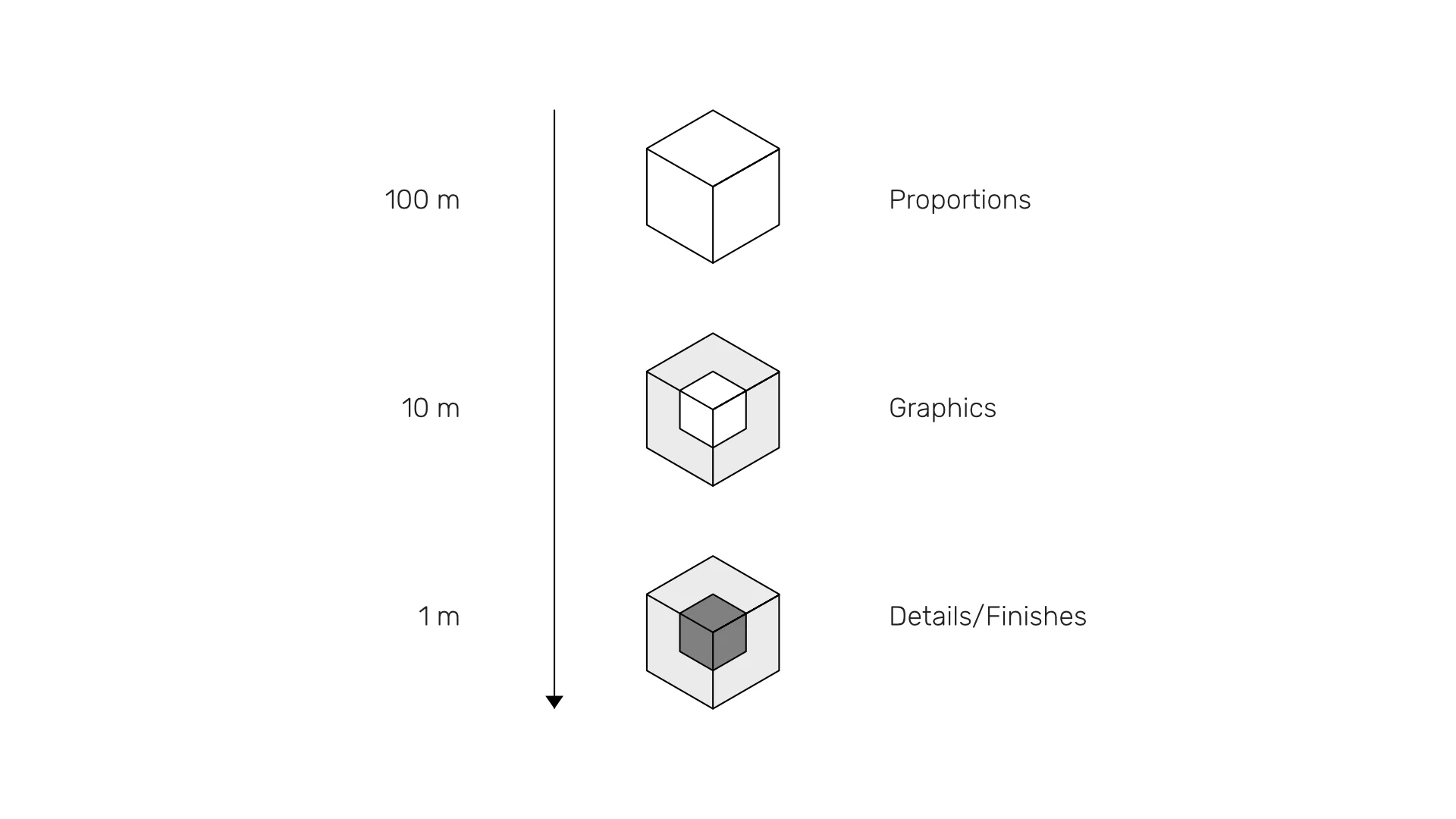
100-10-1 | Illustrated
This is something I picked up during my time in automotive design, and it has shaped the way I approach every project since.
In the car industry, a vehicle has to earn its place at every distance. From across a car park, from the pavement as it drives past, and from right beside it. So the entire design process is structured around those three moments, each one unlocking a different layer of the work.
At 100 meters, only the big picture matters. The overall silhouette, the proportions, the stance. Does it look right? Does it communicate what it needs to? At this distance, details are completely invisible. The only thing that counts is whether the form works as a whole.
At 10 meters, character starts to come through. The shape of the lights, the flow of the surfaces, the graphic language of the windows. This is where a product begins to express something. Where you get a sense of whether it feels sporty or calm, bold or refined.
At 1 meter, the details finally take centre stage. The texture of a surface. The precision of a joint. The small decisions that signal real quality and care.
The rule is simple: you establish the big picture first, and you do not move closer until it works. Because no amount of beautiful detail will rescue a product that falls apart from far away.
Why It Matters
The reason this approach stuck with me is that it solves a problem every designer faces, usually the hard way. It is incredibly easy to fall in love with a detail before the bigger picture is resolved. A beautiful texture, a perfectly considered joint, a surface that catches the light just right. Detail work feels productive. It is satisfying in a way that wrestling with proportions rarely is.
But details are also a trap. Once you have invested time and care into them, it becomes very difficult to let go. You start making decisions around the detail rather than around the whole. And that is where things quietly fall apart.
The honest truth is that this is not just a design problem. It is a human one. We are naturally drawn to the tangible and the immediate. The detail you can see and touch today feels more real than the overall direction that still needs work. But in almost any complex undertaking, whether you are designing a product, developing a brand, or building a business, committing to the details before the foundation is solid is one of the most costly mistakes you can make.
100-10-1 is a simple way of staying honest about where you actually are in the process. And in my experience, that clarity alone is worth a great deal.
Apply It To Your Work
The logic behind 100-10-1 is not exclusive to design. It is really a way of thinking about any complex problem. Start with the big picture, make sure it holds, and only then commit to the details. Whether you are developing a product, building a brand, planning a project, or structuring a presentation, the trap is always the same. It is easy to get pulled into the details before the foundation is truly solid. And once you are deep in the detail, it is very hard to step back.
The next time you commission a design, or are involved in reviewing one, try thinking in distances. Before discussing materials, finishes, or details of any kind, ask the simple question: does this work from far away? Is the overall form doing what it needs to do? Is it saying the right thing before you even get close?
If the answer is yes, move in. Start asking about character and expression. And only once that feels right should the conversation move to the details. It is a small shift in how you engage with a creative process. But in my experience, it changes everything about the outcome.